c. Prayer and Spirituality
At Aston Rowant School, prayer and spirituality are an integral part of daily life. We believe that spirituality is about connection, reflection, meaning, and growth, and that every child should have opportunities to explore this in ways that are inclusive, age‑appropriate, and deeply rooted in our Christian vision and values.
Prayer and spiritual reflection support our children to pause, wonder, give thanks, ask questions, and develop an awareness of themselves, others, and the world around them.
Prayer in Our School
Prayer is woven naturally into the rhythm of the school day, providing regular opportunities for stillness, reflection, and connection with God.
- Every act of Collective Worship includes a time of prayer
- Classes pray together:
- Before lunchtime
- At the end of the school day
- Prayer is inclusive and invitational, encouraging children to participate in ways appropriate to their own experiences and beliefs
Our School Prayer
Our school prayer reflects our Christian vision and GROWTH values, reinforcing what it means to grow together, rooted in God:
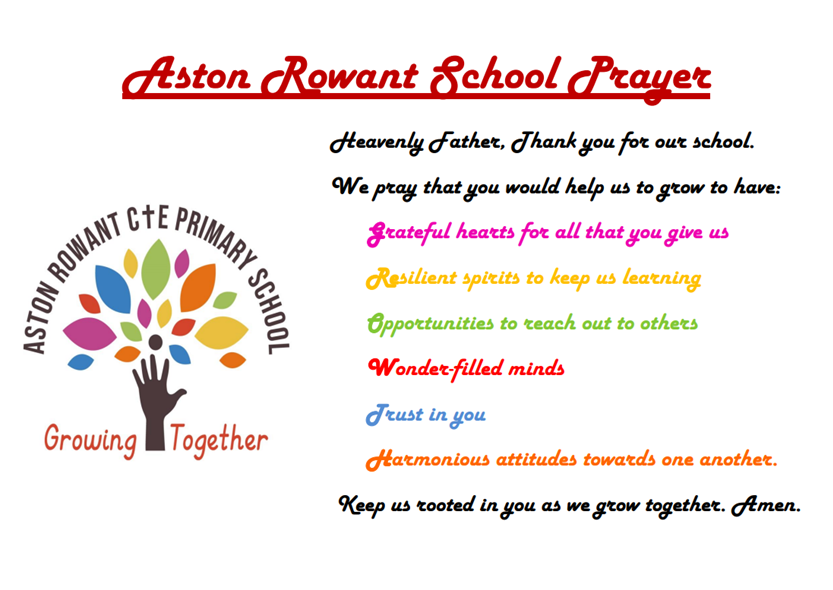
This prayer is familiar to children and is used regularly to support reflection and shared meaning.
Reflection and Prayer Spaces
We believe that spirituality flourishes when children are given time and space to reflect.
To support this, we provide:
- A dedicated Prayer Space in the school hall
- Reflection spaces in every classroom
- A Peace Garden, offering a calm outdoor space for stillness and contemplation
These spaces are used for:
- Prayer and quiet reflection
- Individual and group activities
- Supporting emotional wellbeing
- Exploring big questions and personal responses
Understanding Spirituality at Aston Rowant
We understand spirituality as something that is experienced, lived, and reflected upon, rather than defined narrowly.
Our approach to spirituality is closely connected to our Christian values, helping children understand what spiritual development looks like in everyday life:
- Gratitude – responding to what we have, see, and experience
- Resilience – recognising strength and determination within ourselves
- Outreach – loving others and responding to the love shown to us
- Wonder – feeling awe, asking questions, and being inspired
- Trust – becoming aware of something bigger than ourselves
- Harmony – thinking about how we live with and care for people, nature, and all living things
A Shared Definition of Spirituality
To ensure a shared understanding across the whole school, we worked with:
- Pupils in every class
- Teachers
- Teaching assistants
Together, we explored what spirituality means to us and developed a collective acrostic to help recognise and articulate spiritual moments:
S – Senses are heightened
P – Personal response to each situation
I – Inside and outside of us
R – Relationship with our God
I – Imagine something bigger than us
T – Think about what each situation is revealing to us
U – Understand how we see God in each moment
A – Appreciate the moment
L – Live life to its fullness
This shared definition helps children and adults recognise spirituality in many forms and contexts.
The acrostic reflects:
- What: senses, personal, inside
- Who: relationship
- When: imagine, think, understand, appreciate
- Why: live life to its fullness
Spirituality Across the Curriculum
Spiritual development is planned for and recognised across the whole curriculum, not confined to worship or RE.
- The spirituality acrostic is displayed in every classroom
- It is referenced in lesson planning across subjects
- Staff intentionally identify opportunities for:
- Awe and wonder
- Reflection
- Personal response
- Meaning‑making
This ensures that spirituality is:
- Inclusive
- Intentional
- Embedded
- Lived daily
By nurturing spirituality in this way, we support children to grow as thoughtful, reflective individuals who are rooted in faith, values, and a deep appreciation of life in all its fullness.